
In Omaha, a dented or split garage door section usually goes back to one of three things: a summer hailstorm, a bumper, or a winter of road salt. Often that one section can come out and a new one go in; when it can't, you hear why before anything is ordered. The estimate is free.
Tell us what the door is doing. The estimate is free and you can say no.
A sectional garage door is four or five horizontal sections hinged together, each riding its own rollers in the track. Because each section hangs on its own hardware, a damaged one can usually come out of the stack without the whole door coming down.
The catch is the maker. A replacement section has to be the same design, the same width and height, and the same thickness as the ones beside it, and that only works while the manufacturer still builds that door. The label on the inside of the door, usually on an end stile or the top section, tells the technician who made it and roughly when.
Hail leaves two kinds of damage. Small round dents across a smooth steel face are cosmetic; they look bad from the street but the section still holds its shape. A crease that runs across a section, or a skin that has split along a rib, is different, because the section can start to bow under the door's own weight every time it travels up into the horizontal track.
Embossed wood-grain faces hide light dents better than smooth ones, and a heavier steel skin dents less in the first place. If a storm marked several sections at once, the estimate lays out what each one needs, and whether a few new sections or a new door makes more sense for a house you plan to stay in.
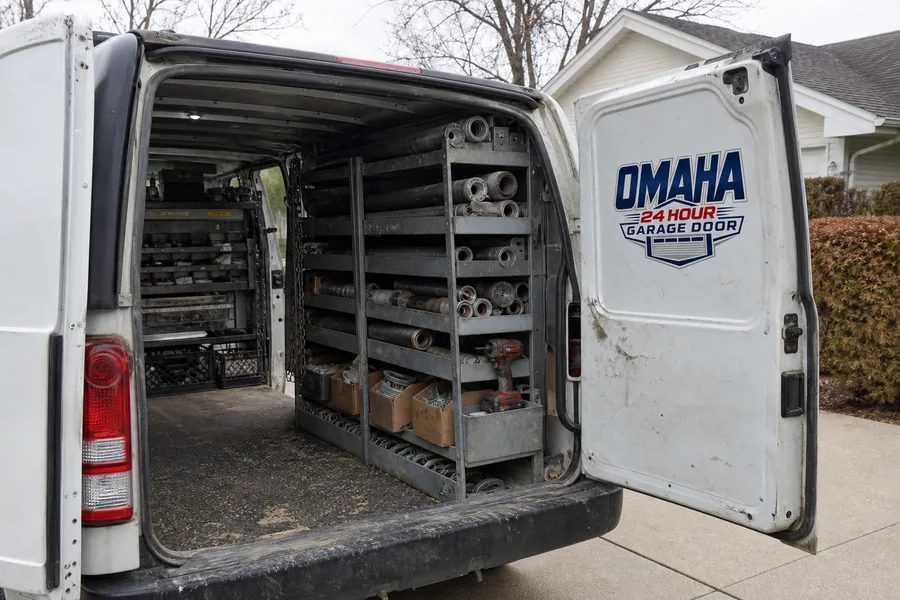
Most single-section replacements are the bottom one. It is the section a bumper finds when someone misjudges the distance, the one a bike or a snow shovel leans against, and the one that sits in snowmelt and salt brine all winter.
On steel doors, rust tends to start at the bottom edge, behind the rubber seal, where salty water collects and never fully dries. By the time the paint bubbles on the outside, the steel underneath can be thin. On the wood doors still found on some older ranches, the bottom section is where rot sets in first. Either way, the seal retainer and the bottom brackets are looked at with the section, since they live in the same wet corner. A fresh bottom section with a new seal also closes the gap that let the water in, which is half the reason the old one failed.
Sometimes the honest answer is a new door. If the maker stopped building the design, nothing will match, and a section from a different line looks patched from across the street. If three or four sections are damaged, the parts and labor of rebuilding the door come close to a new one, without the new door's insulation, springs or rollers.
Age matters too. A door with original springs and worn rollers will need those soon anyway. When that's the case, you'll get both options side by side on the written estimate, with the reasons, so the choice is yours and not a sales pitch.
A new section arrives in the factory finish. A door that has faced the afternoon sun for fifteen summers has faded, so even the right white or almond can read a shade off beside the old sections. On a door seen from the street that difference matters; on a side door it may not.
The technician will say up front how close the match is likely to be, and whether painting the whole door after the swap is worth considering. Window sections are handled the same way: the full top section with its windows can be replaced, or just a cracked window insert when the frame itself is fine.
Most section jobs take two visits: one to measure and order, one to install.
An insulated door has thicker sections with a foam core between two steel skins, and its replacement has to match that thickness and that core. Mixing an insulated door with a single-layer section changes the weight on one part of the door and leaves a cold strip in the middle of a warm one, which shows on the first bitter January morning. The same goes for the reverse: a plain door doesn't gain anything from one thick section, and the mismatch makes the door ride unevenly in the track.
Weight is the reason balance gets attention after every swap. A new section can weigh slightly more or less than the one it replaces, and springs that were set for the old door may need adjusting so the door still stays put when it's stopped halfway.
Often, yes, as long as the manufacturer still makes that design and size. The technician reads the label and measures before anything is ordered, so you know whether a match exists before you commit.
The design and the factory color are matched to what the maker offers. An older door that has faded in the sun can look a shade different next to a new section, and you'll hear how close the match should be before you decide.
Round dents are usually cosmetic. A section that is creased or split can bend as the door travels, though, and that one is worth replacing before it buckles in the track.
Sometimes. Many older designs are no longer made, and when that's the case a new door is the honest answer. The estimate shows both options when both exist.
It can change the weight slightly, so the springs and balance are checked after every swap and the opener's settings are adjusted to the door.
Yes. Depending on the door, either the window insert or the whole top section is replaced, and the technician tells you which applies.
Yes. The door is looked at, the section measured and the options written down for free before any work or ordering.
Say what's wrong and we'll commit to an arrival window you can plan around. The visit and the estimate is free, anywhere in Douglas County.
Prefer a voice? Call (402) 897-6518.
Tell us what the door is doing. The estimate is free and you can say no.