
A full-view glass door changes the front of a modern house more than any other door, and in Omaha it also has to live through hail in June and mornings far below zero. We measure, help you choose the frame and the glazing, install the door and set it up to run right. The estimate is free.
Tell us what the door is doing. The estimate is free and you can say no.
A full-view door is a sectional garage door built from an aluminum frame with glass or clear plastic panels set into it, so the whole face of the door reads as windows. It rolls up on the same kind of track as a steel door and runs on the same kind of opener, which is why it can go into most ordinary garages.
Most of the ones we put up go on newer homes with clean, modern lines, where a dark frame and frosted panels look right. The other half go on garages that have turned into something else: a home gym, a workshop, a place to restore a car in winter. There the appeal is daylight without opening the door.
Hail is the first question here, and it deserves a straight answer. Tempered glass is far tougher than ordinary window glass, and when it does break it falls into small, blunt pieces rather than shards. Laminated glass holds together when it cracks. Polycarbonate panels shrug off hail better than either, though they scratch more easily and look a little less like glass up close.
None of those is hail-proof, and no door is. What makes a glass door practical here is that a broken panel can usually be replaced on its own, without touching the rest of the section, let alone the door.
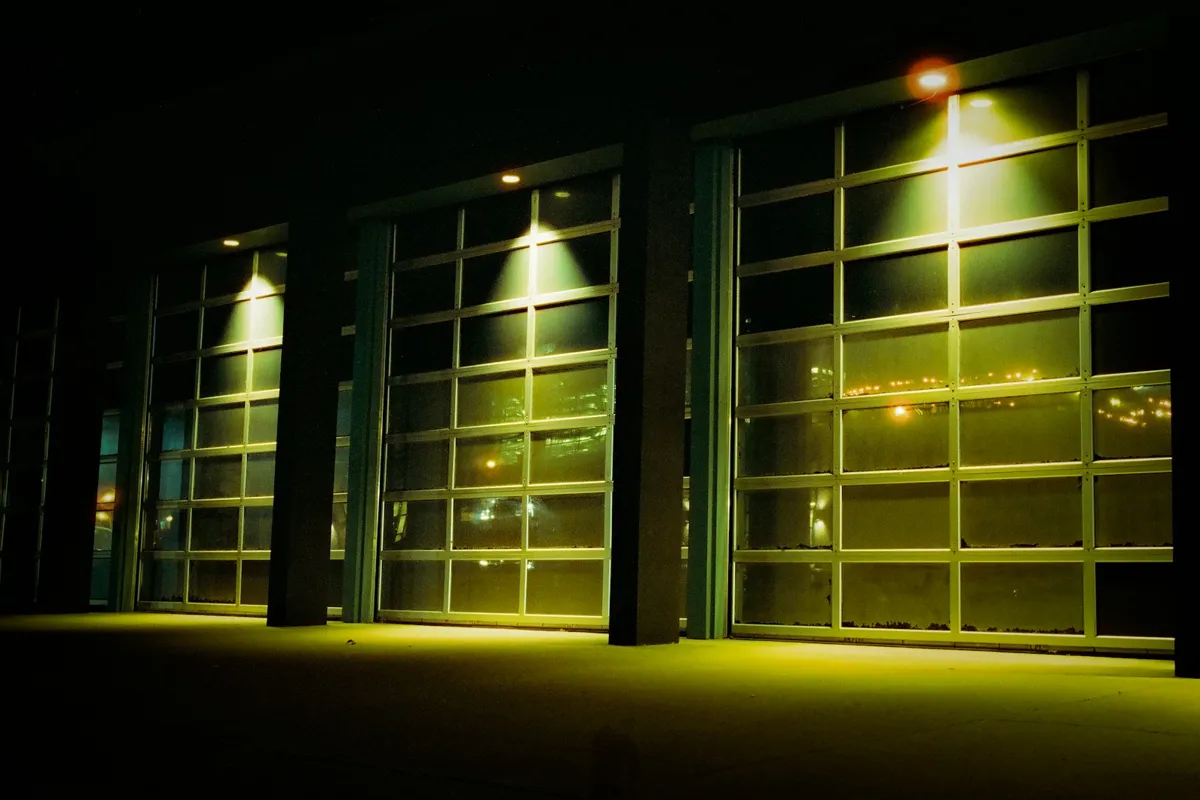
The frame comes in a handful of finishes: clear anodized aluminum, black, bronze and white are the common ones. Black and bronze suit stone and dark siding; white and clear sit better on lighter houses.
Then the glazing. Clear glass shows everything. Frosted or satin-etched glass lets light through while blurring what's inside. Tinted glass cuts glare and keeps a sunny garage a bit cooler. Insulated double-pane units trap a layer of air between two sheets for a door that holds heat better. Panels can be mixed, too, with clear glass across the top row and frosted below.
Samples come to the measuring visit, so you see the finish and the glass against your own house in daylight before anything is ordered.
Glass holds heat less well than a foam-filled steel door, and it's worth knowing that before choosing one for an attached garage. On a bitter morning a single-pane door lets the garage run colder, and moisture from a car coming in wet can frost on the inside of the panels.
Insulated glass and tight seals close most of that gap. If the garage is heated, or shares a wall with a bedroom or the kitchen, insulated panels and a new bottom seal are the ones we'd suggest. If it's a detached garage used for storage, single-pane glass is often fine.
A glass door is lovely from the street at dusk and just as see-through at night, when the garage lights are on and everything inside is on display. For a garage that faces the street, frosted or tinted panels keep the look without the view.
Some people keep the top row clear for daylight and frost the lower sections, where the eye lands first. The choice is made at the estimate, with the samples in front of you.
A lot of the glass doors we hang go on garages that do a second job. A home gym gets daylight and a view of the driveway without the door standing open in February. A woodshop or a car project gets light to work by on short winter afternoons. A garage that opens onto a patio becomes part of the yard on summer evenings.
Each of those uses points to different glass. A gym or a shop that's heated wants insulated panels and good seals; a space used mostly in summer does fine with single-pane glass. Say how the garage is used when we come to measure, because it changes the recommendation more than the look does.
A glass door is ordered to the opening, so the order of things matters.
Aluminum sounds light, but a door full of glass usually weighs more than a plain steel door of the same size. The springs have to be chosen for that weight and wound to it, or the opener ends up carrying the door on every trip.
An older opener that was barely managing a hollow steel door may not be up to the new one. The technician checks before the order goes in and tells you whether your opener stays or should be replaced at the same visit, so you aren't paying for a second trip later.
Large hail can crack glass, which is why tempered, laminated and polycarbonate panels exist. When a panel does break, it can usually be replaced by itself rather than replacing the whole section.
Through clear glass, yes, especially at night with the lights on. Frosted, satin-etched or tinted panels let light in and keep the inside private.
A single-pane door holds less heat than an insulated steel one. Insulated glass and good seals narrow the difference, and we'd suggest them for an attached or heated garage.
Sometimes. On a mid-century ranch a door with a glass top section often fits better than a full-view door. We bring samples so you can judge against the house itself.
It depends on the opener and the door's weight. That gets checked before anything is ordered, and you hear plainly whether the opener stays.
Yes. On a two-door garage, some people put glass on the bay that serves as a gym or a shop and keep a solid door on the one they park in, with the frame color matched to the other door.
Mainly what any door needs: rollers, hinges, springs and seals looked after. The aluminum frame doesn't rust the way bare steel does.
Yes. The measuring visit and the written estimate are free, and nothing is ordered until you say yes.
Say what's wrong and we'll commit to an arrival window you can plan around. The visit and the estimate is free, anywhere in Douglas County.
Prefer a voice? Call (402) 897-6518.
Tell us what the door is doing. The estimate is free and you can say no.